
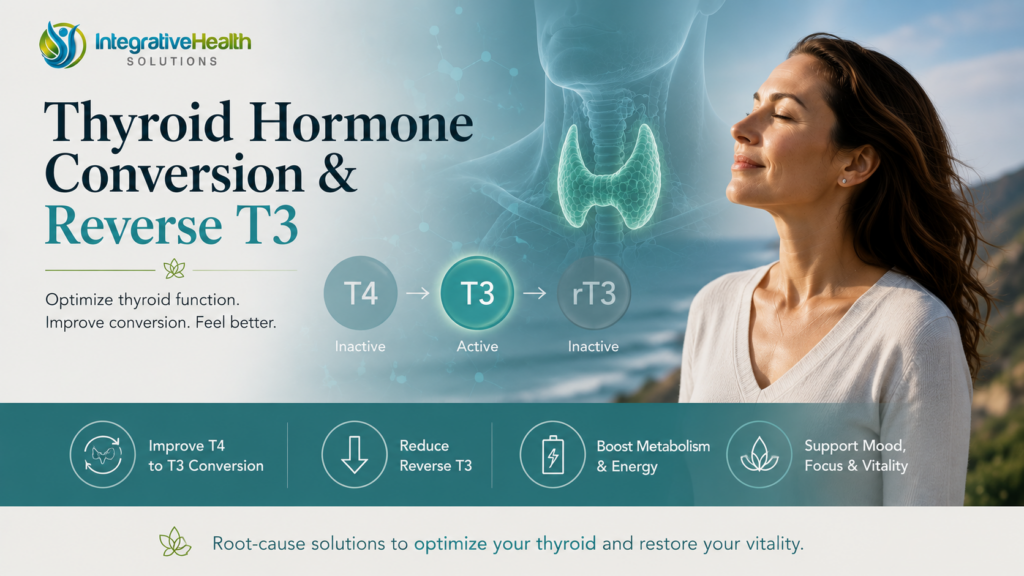
Thyroid Hormone Conversion and Reverse T3
When Thyroid Symptoms Persist Despite “Normal” Laboratory Results
Many patients continue to experience fatigue, brain fog, difficulty losing weight, low body temperature, constipation, reduced motivation, hair changes, or other symptoms commonly associated with hypothyroidism even after beginning thyroid hormone treatment.
Sometimes laboratory results fall within the reference range while the patient still does not feel well.
Persistent symptoms do not automatically mean that thyroid hormone treatment is inadequate. Thyroid physiology is complex, and similar symptoms may also be influenced by nutrient deficiencies, metabolic dysfunction, hormone changes, poor sleep, chronic illness, stress, inflammation, medication effects, or other medical conditions.
At Integrative Health Solutions, Dr. Bronner takes a comprehensive approach to persistent thyroid-related symptoms. Evaluation may include thyroid hormone production, hormone availability, thyroid antibodies, medication absorption, metabolic health, nutritional status, sleep, stress, and other factors that influence energy and overall function.
The goal is not simply to normalize a laboratory value. It is to understand the complete clinical picture and develop an individualized treatment plan.
Schedule a Comprehensive Thyroid Evaluation
Understanding Thyroid Hormones
The thyroid gland primarily produces two hormones:
- Thyroxine, also called T4
- Triiodothyronine, also called T3
T4 functions largely as a circulating precursor hormone.
T3 is the more biologically active thyroid hormone and interacts with thyroid receptors throughout the body.
Many tissues convert T4 into T3 through enzymes known as deiodinases. This conversion occurs in several organs and tissues, including the liver, kidneys, muscles, brain, and thyroid gland.
Thyroid hormones influence many important functions, including:
- Energy production
- Metabolism
- Body temperature
- Heart rate
- Brain function
- Digestion
- Muscle function
- Cholesterol metabolism
- Mood
- Growth and tissue repair
Thyroid regulation involves communication among the hypothalamus, pituitary gland, thyroid gland, circulating hormones, and tissues throughout the body.
What Is Reverse T3?
Reverse T3, commonly abbreviated as rT3, is an inactive metabolite produced during normal thyroid hormone metabolism.
The body can convert T4 into either:
- Active T3
- Inactive reverse T3
Reverse T3 is structurally similar to T3 but does not produce the same biological effects.
Production of reverse T3 may increase during certain physiological stresses, including severe illness, major injury, fasting, significant calorie restriction, and some chronic medical conditions.
This response may represent an adaptive change in thyroid hormone metabolism during periods of illness or reduced energy availability.
Reverse T3 is therefore best interpreted cautiously and within the broader clinical context.
Is Reverse T3 Testing Useful?
Reverse T3 testing remains controversial.
Major thyroid organizations do not recommend reverse T3 as a routine test for diagnosing hypothyroidism. The American Thyroid Association states that reverse T3 testing generally does not help determine whether hypothyroidism is present in healthy, nonhospitalized individuals. (American Thyroid Association)
Reverse T3 may be influenced by:
- Acute illness
- Chronic disease
- Significant calorie restriction
- Fasting
- Major physical stress
- Certain medications
- Changes in thyroid hormone metabolism
Because reverse T3 can change for many reasons, an isolated result does not establish impaired thyroid function or determine whether thyroid medication should be increased.
When reverse T3 is measured, it should be interpreted together with:
- Symptoms
- TSH
- Free T4
- Free T3 when clinically appropriate
- Medical history
- Current medications
- Nutritional status
- Metabolic health
- The presence of acute or chronic illness
What About the Free T3-to-Reverse-T3 Ratio?
Some clinicians calculate a ratio between free T3 and reverse T3 as an additional assessment of thyroid hormone metabolism.
However, there is no universally accepted diagnostic threshold for this ratio, and it is not currently considered a standard diagnostic test for hypothyroidism.
The ratio may be affected by differences in:
- Laboratory methods
- Units of measurement
- Acute illness
- Calorie intake
- Medication use
- Thyroid hormone treatment
- Changes in thyroid-binding proteins
For these reasons, the ratio should not be interpreted as a stand-alone diagnosis or used as the sole basis for changing thyroid medication.
Clinical symptoms and established thyroid-function testing remain central to thyroid evaluation.
Persistent Symptoms Despite a Normal TSH
TSH is an important marker of thyroid regulation and remains a primary test for evaluating and monitoring many forms of hypothyroidism. (NIDDK)
However, some patients continue to experience symptoms despite a TSH result within the laboratory reference range.
Possible explanations may include:
- Inadequate thyroid hormone replacement
- Medication absorption problems
- Inconsistent medication use
- Medication or supplement interactions
- Iron deficiency
- Vitamin B12 deficiency
- Vitamin D insufficiency
- Insulin resistance
- Menopause or other hormone changes
- Low testosterone
- Poor sleep
- Sleep apnea
- Chronic stress
- Depression or anxiety
- Inadequate nutrition
- Chronic inflammation
- Other medical conditions
Persistent symptoms deserve a comprehensive evaluation rather than automatic increases in thyroid medication.
Looking Beyond TSH Alone
TSH provides valuable information, but it is not the only factor considered during a comprehensive thyroid evaluation.
Depending on the individual, testing may include:
- TSH
- Free T4
- Free T3
- Thyroid peroxidase antibodies
- Thyroglobulin antibodies
- Reverse T3 in selected clinical situations
- Complete blood count
- Comprehensive metabolic panel
- Iron and ferritin
- Vitamin B12
- Folate
- Vitamin D
- Fasting glucose
- Insulin
- Hemoglobin A1c
- Lipid testing
- Sex hormones
- Inflammatory biomarkers
Testing recommendations depend on symptoms, diagnosis, medication use, medical history, and treatment goals.
Factors That May Affect Thyroid Hormone Conversion
The conversion of T4 into T3 is influenced by multiple physiological factors.
Potential contributors may include:
- Acute illness
- Chronic disease
- Significant calorie restriction
- Rapid weight loss
- Inadequate protein intake
- Nutrient deficiencies
- Certain medications
- Liver or kidney disease
- Chronic inflammation
- Aging
- Changes in metabolic health
Changes in serum T3 or reverse T3 do not always indicate a primary thyroid disorder.
They may reflect the body’s response to another underlying condition.
This is one reason that thyroid laboratory results should always be interpreted within the broader clinical context.
Nutrition and Thyroid Physiology
Several nutrients participate in thyroid hormone production and metabolism.
These include:
- Iodine
- Selenium
- Zinc
- Iron
- Vitamin D
- Vitamin B12
- Magnesium
Nutrient deficiencies may contribute to fatigue or other symptoms that overlap with hypothyroidism.
However, supplementation should be individualized.
More is not always better, and excessive intake of certain nutrients—particularly iodine—may adversely affect thyroid function in susceptible individuals.
Testing and treatment should be based on dietary intake, medical history, laboratory findings, and individual clinical need.
Thyroid Medication Absorption
Persistent symptoms or abnormal thyroid testing may sometimes result from inconsistent medication absorption rather than impaired hormone conversion.
Factors that may interfere with absorption include:
- Taking thyroid medication with food
- Calcium supplements
- Iron supplements
- Certain antacids
- Some acid-suppressing medications
- High-fiber meals
- Gastrointestinal disorders
- Celiac disease
- Changes in medication formulation
Medication timing and consistency are important.
Patients should discuss medication administration, supplements, and potential interactions during follow-up visits.
T4 Therapy
Levothyroxine is a synthetic form of T4 and remains the standard treatment for hypothyroidism. (Mayo Clinic)
Many patients respond well to T4 therapy.
Benefits of levothyroxine include:
- Stable hormone levels
- Long duration of action
- Predictable dosing
- Extensive clinical experience
- Straightforward laboratory monitoring
Treatment is individualized according to:
- TSH
- Free T4
- Symptoms
- Age
- Cardiovascular health
- Pregnancy status
- Other medical conditions
- Medication interactions
T4 and T3 Combination Therapy
Some patients continue to report persistent symptoms despite appropriate levothyroxine treatment.
In selected situations, a carefully monitored trial of combined T4 and T3 therapy may be considered after other potential causes of symptoms have been evaluated.
Clinical trials have not shown consistent benefit from combination therapy across all patients, so it is not considered the standard treatment for everyone. (PMC)
Potential considerations include:
- Persistent symptoms despite appropriate T4 treatment
- Confirmed thyroid diagnosis
- Exclusion of other causes of symptoms
- Cardiovascular history
- Bone health
- Age
- Pregnancy status
- Patient preference
- Ability to complete appropriate monitoring
Treatment should be individualized and regularly reassessed.
Potential Risks of Excess Thyroid Hormone
Increasing thyroid hormone treatment does not always improve symptoms.
Excess thyroid hormone may contribute to:
- Palpitations
- Rapid heart rate
- Anxiety
- Tremor
- Insomnia
- Excessive sweating
- Muscle loss
- Bone loss
- Abnormal heart rhythms
The goal is not to achieve the highest possible T3 level or suppress TSH unnecessarily.
The goal is to achieve appropriate thyroid function while minimizing the risk of overtreatment.
Metabolic Health and Thyroid Symptoms
Metabolic dysfunction may produce symptoms that overlap with hypothyroidism.
These may include:
- Fatigue
- Difficulty losing weight
- Brain fog
- Reduced energy
- Increased abdominal fat
- Food cravings
- Exercise intolerance
Evaluation may include:
- Fasting glucose
- Fasting insulin
- Hemoglobin A1c
- Lipid testing
- Body composition
- Nutrition
- Physical activity
- Sleep
Treating metabolic dysfunction may improve symptoms even when thyroid medication does not require adjustment.
Hormones and Thyroid Function
Symptoms associated with menopause, low testosterone, adrenal dysfunction, or other hormone changes may resemble thyroid symptoms.
These may include:
- Fatigue
- Brain fog
- Reduced motivation
- Weight changes
- Sleep disturbance
- Mood changes
- Reduced libido
- Loss of muscle mass
A comprehensive evaluation may include sex hormones, metabolic markers, sleep, stress, and nutritional status rather than attributing every symptom to the thyroid.
A Personalized Approach to Persistent Thyroid Symptoms
There is no single thyroid protocol that works for every patient.
At Integrative Health Solutions, evaluation may include:
- Comprehensive thyroid testing
- Review of current thyroid medication
- Medication-absorption assessment
- Thyroid antibody testing
- Nutrient evaluation
- Metabolic testing
- Hormone assessment
- Sleep evaluation
- Gastrointestinal health
- Lifestyle factors
- Cardiovascular risk
Treatment recommendations are based on the complete clinical picture rather than one laboratory value.
Feel Better by Looking at the Whole Picture
Persistent fatigue, weight changes, cognitive symptoms, low energy, and other concerns should not automatically be dismissed because TSH is within the reference range.
At the same time, not every persistent symptom is caused by impaired thyroid conversion or elevated reverse T3.
A careful evaluation can help distinguish thyroid-related concerns from metabolic dysfunction, hormone changes, nutrient deficiencies, sleep disorders, medication effects, and other contributing factors.
Dr. Bronner combines comprehensive thyroid assessment with individualized medical care to help patients better understand their symptoms and develop a safe, practical treatment plan.